At 52, this IRS officer can dead-lift 160 kg: ‘I started weight lifting at 45, it’s the best anti-ageing therapy’
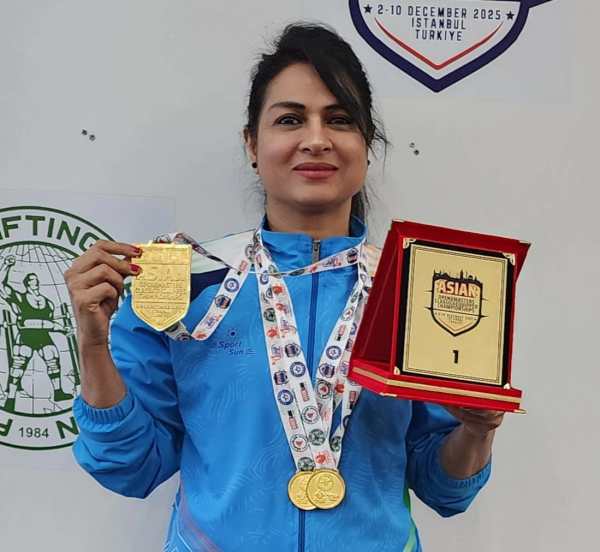
For decades, she had been waking up in the morning to help her children get ready for school and then rush for her 9-to-5 job. That changed seven years ago. As her children grew up, she chose self-care and signed up for strength-training sessions at a gym that would keep her agile in her middling years. Now, at 52, IRS officer Ekta Vishnoi has been winning medals for India in power-lifting. “While I never had international championships in mind, I realised pretty quickly after joining the gym in 2019 that lifting weight was essential for a healthy life, especially in women over the age of 40 years,” she says.
Vishnoi, who never misses her training session in a tin shed fit-out at a public park, be it sun, rain or chilly winds, started with smaller weights. Now she can squat with 130 kg, do a bench-press with 72.5 kg and a deadlift with 160 kg. Powerlifting championships allow and encourage competitors over 50 and feature “Master’s” divisions (typically 40+ and even up to 80+). Lifters over 50 compete regularly, with some even setting world records. For Vishnoi though, lifting weights is not about scores but about anti-ageing therapy. “If you want to reverse your age, you need to start weight training. It also improves the way I look. I do not need any botox or anti-aging creams, it’s better than spending an hour in the parlour. Also, the more muscle mass you have, the better your body works.”
She also feels confident and assured about leading a life free of disease burden that menopause —when women stop having their periods and their estrogen levels drop — brings. “I know my bones will not break if I take a fall. And, unlike most of my batchmates and colleagues, I do not have diabetes or hypertension. All the reports for my health check-ups have returned normal,” says Vishnoi. This is significant considering more than one in three people in urban India live with diabetes or pre-diabetes and hypertension, according to estimates from the ICMR-INDIAB study. This proportion is likely to be higher among those above the ages of 50 or 60 years.
 Vishnoi advises people to start with lighter weights and ensure that they get their posture right.
Busting myths
Women still stay away from the weight-racks in their gyms because they believe in myths over facts. Whenever Vishnoi tells someone that she is a power-lifter, she gets asked whether she would get muscles and start looking like men. “This is one of the main concerns that women have when it comes to lifting weights. I lift weights as heavy as the ones men do, yet I do not look like them. Our bodies are built different. If lifting weights were to make women look like men, why would women actors train?”
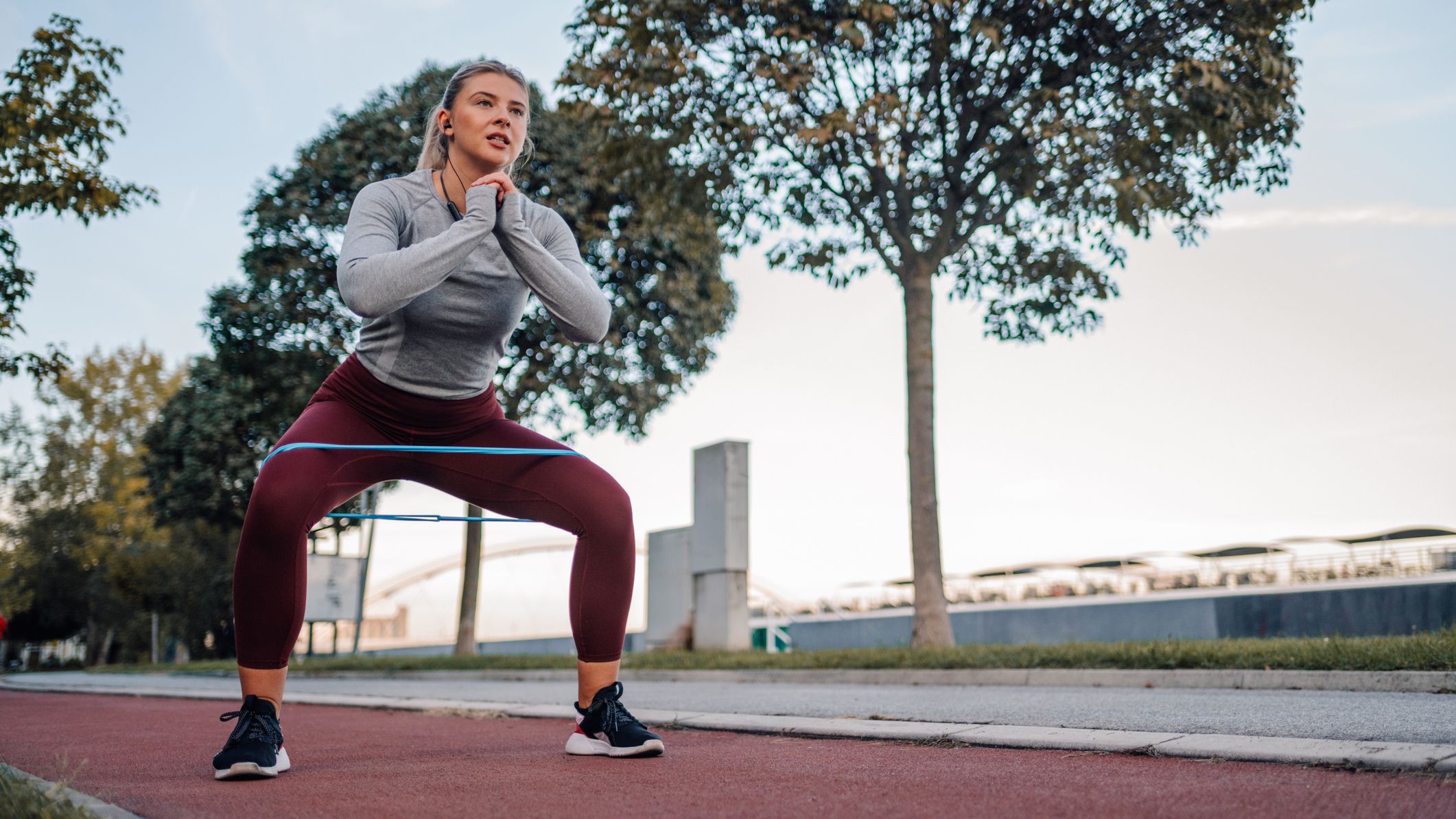
She adds that there is also no right time to start. She herself started in her late 40s. “No matter when you start, lifting weights can only improve your health. It is actually essential for older women because after the age of 40, the muscle and bone density loss is rapid. And you can feel the difference,” she says. Age-related changes, inactivity and inadequate nutrition lead to declining bone density at the rate of one per cent a year after the age of 40 years. Strength training — using free weights, machines and resistance bands — not only increases muscle mass but also bone strength.
“While cardio or aerobic exercises like jogging and zumba are good for the heart, there are several benefits of strength training as well. People should aim for a mix of both in their workout regimen — ideally three days of cardio and three days of weight training or 30 minutes of each during a one-hour workout,” says Dr Rommel Tickoo, director of internal medicine at Max Healthcare. Strength training has an all-round impact. “It is more important for women after menopause because the decline in estrogen levels leads to faster bone loss. Strength training is also a good way to control sugar levels because it increases insulin sensitivity. It accelerates metabolism, reduces inflammation and protects against cognitive decline. For older individuals, it is also a good way to improve balance and thereby reduce the risk of falls,” he adds.
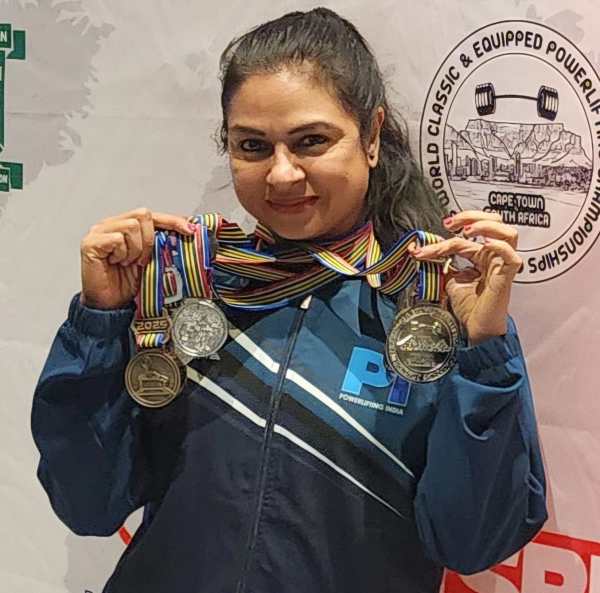 For Vishnoi — who has competed and won multiple gold medals at international championships — training is tougher than most.
Start small, eat right
Vishnoi advises people to start with lighter weights and ensure that they get their posture right. “Investing in a good personal trainer for the first few months is an investment for life. Once you learn how to lift under the guidance of someone, you can start doing it on your own. If your posture is wrong or you start too heavy, you may injure yourself,” she says.
Story continues below this ad
A large part of staying fit for her is also eating right but she does not “diet.” The only rule she has for herself is eating home-cooked meals. “I eat the normal roti, sabji and dal for my meals. The only thing that I have to keep in mind is whether I am consuming enough protein,” she says. Because she lifts heavy weights, her body needs double the protein that a woman her age needs to mend and heal her muscles. The recommended amount of protein for a healthy person is around 0.8 grams per kilogram of body weight. For athletes, it is 1.2 grams per kilogram of body weight. “To increase my protein intake, I have added eggs to my lunch and dinner,” she says.
Vishnoi eats out once or twice a month but avoids fried food. “I have cheat foods like sweets or puris only once in two or three months. That, too, small portion sizes. For example, I had two gujiyas throughout the Holi celebrations,” she says, just enough to quieten her craving.
Work-life balance
For Vishnoi — who has competed and won multiple gold medals at international championships — training is tougher than most. “I do not have the luxury of training for several hours a day as I have my office job. I have to be at work by 9 am. This means, I only have a couple of hours in the morning when I can train. This routine holds even when I am preparing for a championship.”
Being a joint secretary in the department of biotechnology means Vishnoi cannot take several weeks off before a competition. Instead, she wakes up an hour earlier and heads to her practice pit in the shed. “There are several facilities for athletes to train in, but I cannot spend an hour each day travelling to well-equipped gyms. This way, I get an extra hour every morning ahead of the championships,” she says. In winters, trainers try to keep the wind out with a tarpaulin sheet and in summers, she has to pour a bottle of water over her head to keep cool during practice.
Story continues below this ad
She is currently training for the national-level championship in July, which will secure her entry to the international power-lifting contingent. She will either compete in the Commonwealth championship in September or world championships in October later this year. “It is important for women to take that one hour out of their schedule each day to take care of themselves. It can be anything, walking or dance. But I would suggest that if you have only one hour, use it for weight training, at least a couple of times a week,” says Vishnoi.